An Update on Metadata Routing
 Stefanie Senger
This blog post is a cross-post of a Probabl blog post and based on a talk given at EuroSciPy 2026 in Kraków (slides).
Metadata routing has been introduced gradually in experimental mode since scikit-learn 1.3; coverage is now almost complete, and the feature is mature enough that users can use it in real workflows.
What is metadata routing?
In scikit-learn, metadata is data you want to apply on top of your tabular
features and your target. It influences how a function treats X and y.
You may be familiar with two common kinds of metadata from scikit-learn: sample_weight
and groups. In addition to these, libraries such as fairlearn
expose their own kinds of metadata, and you can define custom metadata to be used in
business logic, for instance. The benefit of using metadata is usually not a higher
score on the model, but a more realistic or better tuned model to begin with.
Routing is the mechanism that passes that metadata between several components of a
pipeline to where it is finally used (“consumed”). Before the routing API, using
metadata was only possible in limited cases. With routing enabled, you can pass
sample_weight and groups through nested meta-estimators, combine third-party objects
with scikit-learn estimators while still forwarding their metadata, and define custom
metrics, scorers, and estimators that consume metadata you invent yourself.
Without routing (enable_metadata_routing=False, the default) |
With routing (enable_metadata_routing=True) |
|---|---|
Restricted use of sample_weight and groups |
sample_weight and groups can be used in nested structures |
| Metadata from other libraries cannot be passed through scikit-learn objects | scikit-learn objects can route metadata to objects from other libraries |
| Local use only of custom metadata | Custom metadata can be routed to custom functions and methods |
The Metadata Routing API is a potent and flexible tool that allows users to define in detail where their metadata gets used. It enables new use cases and enhances interoperability with third-party libraries. The adoption of the routing API is spreading in the ecosystem, for example in fairlearn, imbalanced-learn, skada, skorch, and skfolio.
Metadata in the wild
Let’s walk through an example.
Imagine a medical study on the effectiveness of a new treatment. Here we have observational data that is getting used in that study. Features include “sex”, “age”, “severity”, and whether a patient received a medication; the target is the “recovery time”. This data is naturally biased, because it does not come from a randomized trial. It entails all the imbalance and structure that real world data usually implies.
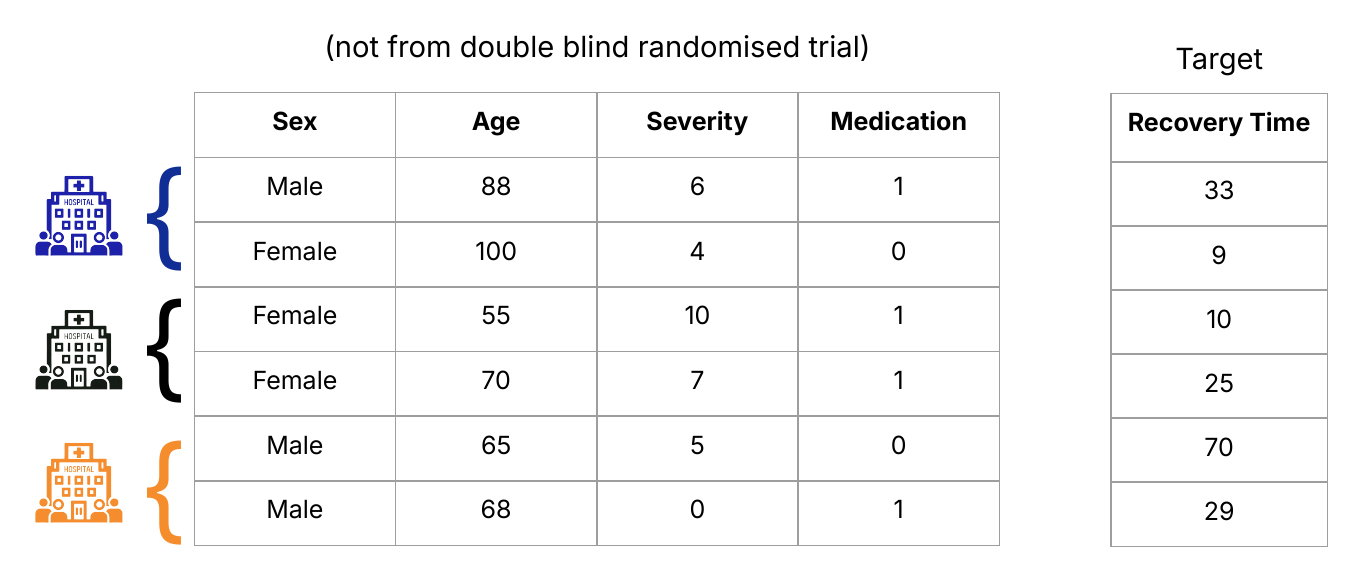
Figure 1: Table of data and target for our example study.
Patients come from different hospitals that differ in systematic factors such as medical
devices, policies, and the socioeconomic mix of patients. A sample’s provenance from a
certain hospital is useful for evaluation, but it is not a feature we want the model to
treat like “age” or “severity”. Instead we keep it as groups with shape
(n_samples,), but separate from X.
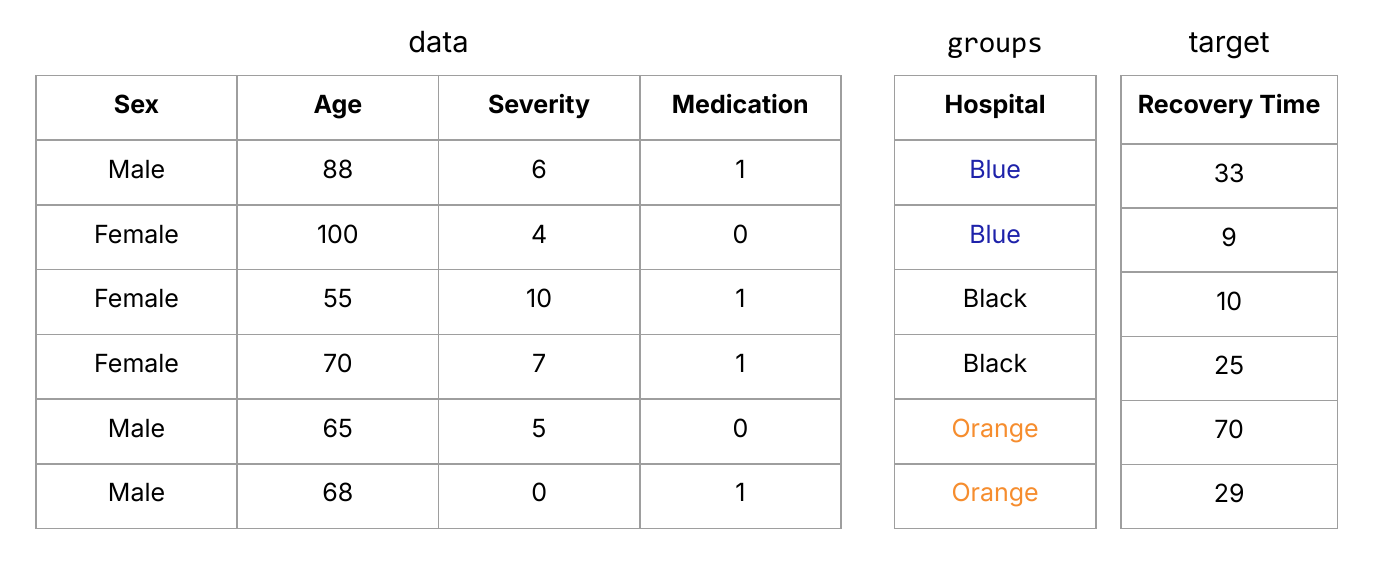
Figure 2: Table of data and target with an additional groups metadata.
During cross-validation we want a realistic estimate of how well a model can generalize. If samples from the same hospital appear in both the training and validation fold, the model can look better than it will on a new hospital, which is a form of data leakage.
Instead of allowing data to be leaked, we use the metadata groups that we pass into
cross-validation. scikit-learn’s GroupKFold keeps each group entirely in either the
train set or the validation set for a given fold:
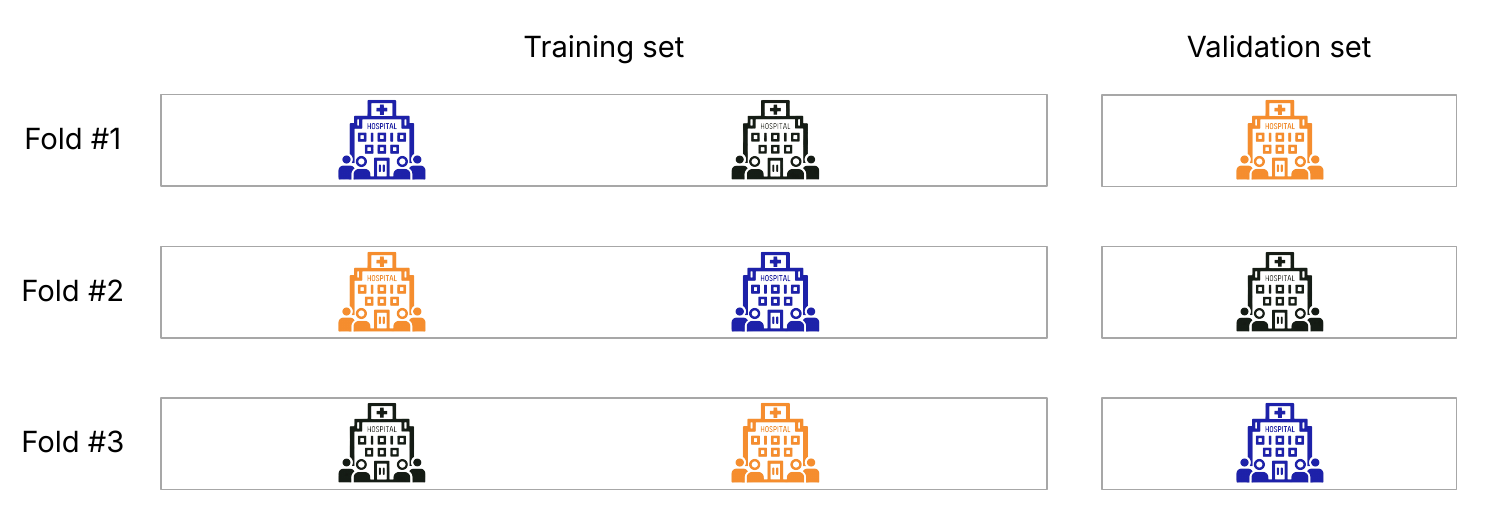
Figure 3: Training and validation set after splitting with GroupKFold.
Passing groups into cross_validate together with a grouped splitter has worked in
scikit-learn for a long time and keeps functioning the same way:
from sklearn.model_selection import GroupKFold, cross_validate
from sklearn.linear_model import Ridge

ridge = Ridge()
cv = GroupKFold(n_splits=2)
cross_validate(ridge, X, y, cv=cv, groups=groups)
For our patient data set, sample_weight draws the model’s attention toward (or away
from) particular samples. It can be used if biases refer to how features are distributed
or relate to one another. For instance, if we suspect that race, age or socioeconomic
status of a patient determined if they got the new treatment at all, sample_weight can
re-balance the over- or under-representation of a certain group of patients and draw the
model to emphasize reducing training error on the higher weighted samples more.
One method to determine sample_weight values is inverse probability of treatment
weighting (IPTW) in observational studies (see Florian Wilhelm, Causal Inference and
Propensity Score
Methods
(walkthrough with scikit-learn)). Probabl Whiteboard Series has also published an
exploration on the usefulness of sample_weight from a different angle (see Improving
models via subsets).
In practice, since Ridge.fit can consume sample_weight, you might reasonably try:
cross_validate(ridge, X, y, cv=cv, sample_weight=sample_weight)
…and hit a wall:
TypeError: got an unexpected keyword argument 'sample_weight'
In practice you often nest further. Maybe you want to cross_validate around a
GridSearchCV that tunes Ridge, with a scorer that can also take sample_weight and
a GroupKFold that needs groups. Before routing, that stack failed: cross_validate
had no way to forward sample_weight into the nested fit and score calls, even
though those methods support it. The same limitation blocked metadata from many
third-party libraries when combined with scikit-learn’s cross-validation tools.
If we want fairer, less leaky models to predict the treatment effect for future patients, we need metadata to move through several layers of other tools by contract. Metadata Routing API was built to bridge exactly this gap: you can use it to get your metadata to be used inside the functions that consume it.
Using the metadata routing API
With metadata routing, the code stays close to what you already know. The orange boxed snippets show you what you need to add to take advantage of the routing in experimental mode:
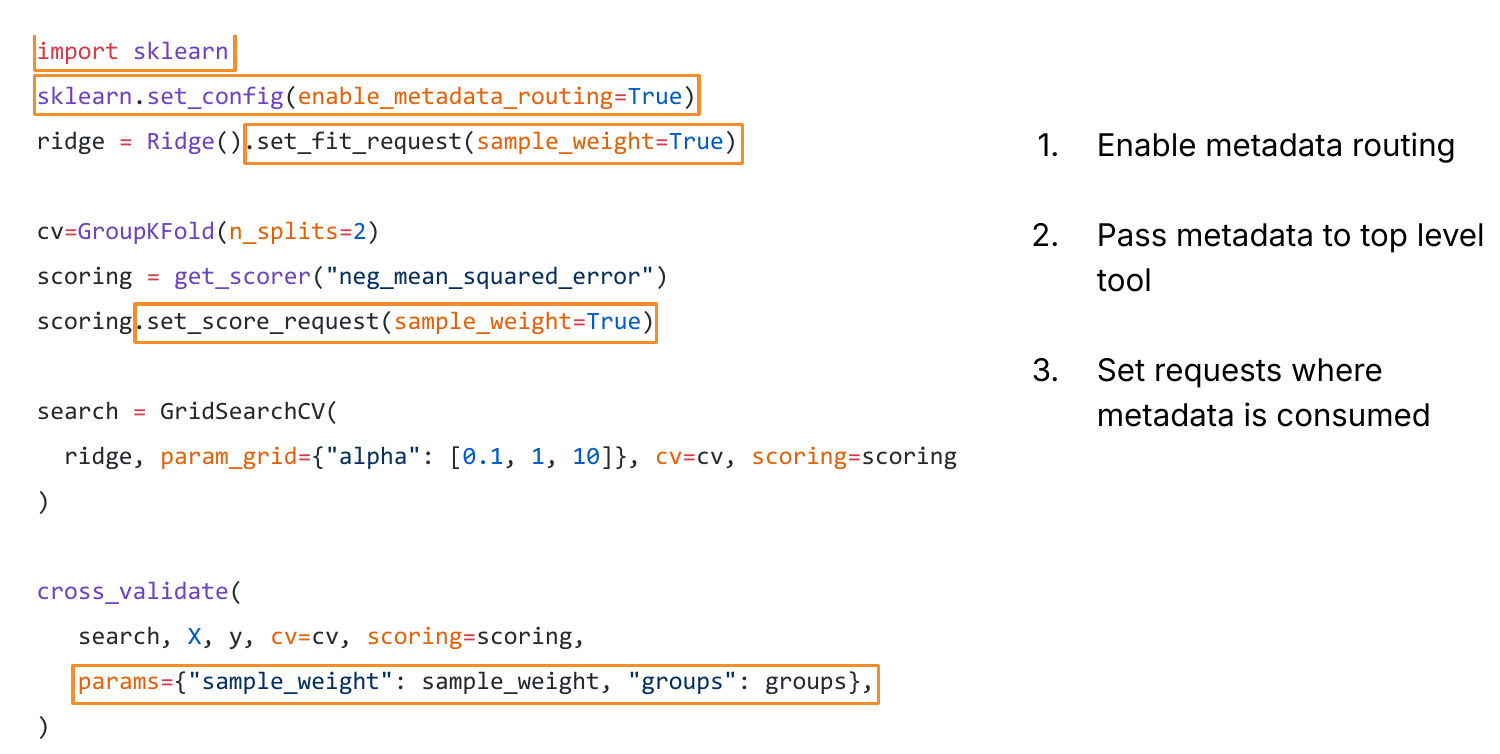
Figure 4: The three metadata routing steps: enable, pass at the top, request metadata where it gets used. See Metadata Routing in scikit-learn User Guide for a full example.
- Enable the experimental feature.
set_config(enable_metadata_routing=True)turns routing on. Disable it when you no longer need it. - Pass metadata once at the top-level tool (here
cross_validate). That top-level object could also be aPipelineor a meta-estimator (an estimator that takes another estimator as an argument). - Request metadata where it should be consumed, with
set_*_request(set_fit_request,set_score_request, and so on). Grouped splitters such asGroupKFoldalready requestgroupsby design, so you do not set that yourself.
In experimental mode, users need to use set_*_request methods everywhere a metadata
can be consumed. These methods exist to grant users maximum flexibility. In future
releases, these will come with default settings, so that users in the most common use
cases don’t need to touch them anymore.
This is the core mental model: pass at the top, request at the leaves.
Pipelines that transform validation sets
Metadata routing also unlocks a new feature that was impossible before and rescues data
scientists from awkward workarounds: validation sets that are transformed alongside
X in a Pipeline.
Some estimators such as HistGradientBoostingClassifier can split off a validation set
inside fit for validating early stopping. If used in a Pipeline with preprocessing
steps that were applied on the full matrix, that internal split leaks information from
the train set into the validation set. Validation data should be split before
transformation, then run through the same steps as training X.
Pipeline’s transform_input parameter (introduced in version 1.6) allows users to
define metadata that should be transformed along with X until a step consumes it.
LightGBM estimators are now
compatible with this API. XGBoost does not
support transform_input yet at the time of writing.
The new feature allows users to pass a validation set of their liking through a
Pipeline, for instance by performing a train_test_split beforehand:
![Pipeline with transform_input=['X_val'] and
HistGradientBoostingClassifier.set_fit_request(X_val=True,
y_val=True)](/assets/images/posts_images/fig05_transform_input.png)
Figure 5: Passing X_val through a Pipeline with transform_input for early
stopping.
Here X_val is transformed like X_train at every pipeline step until
HistGradientBoostingClassifier.fit consumes it for early stopping.
Recent updates and ongoing work
Metadata routing is still experimental, but it is pretty mature in practice. On top of the pure routing, we continue developing features based on the metadata routing mechanism. Some are already implemented; others are still in progress:
Already available since 1.9:
TargetEncodercan use grouped splitters (#33089)
In progress:
- Default requests, so users don’t need explicit
set_*_requestfor common cases (#31413) - Callbacks (e.g.
ScoringMonitor) can accept metadata such asX_valandy_val(#34137) - Developer API for customised metadata requests in consumers (#34314) (for further information see Developing estimators compliant with metadata routing)
- Visualization and debugging tools for metadata routing (#31535)
Once Metadata Routing gets released as a stable feature, the user’s code will look as simple as it always was for default cases, except we can now pass metadata and it will be used internally.
Takeaway
Metadata routing turns “please somehow get this array into the right nested
fit/predict/score call” into a deliberate contract: pass values at the top and
request them where they are consumed. This unlocks many new use cases and a tighter
integration of scikit-learn compatible libraries in the ecosystem. The API is still
experimental, but worth trying if your real data is grouped, weighted, or otherwise
richer than (X, y).
Acknowledgements
I would like to thank Adrin Jalali, without whose consistent work on Metadata Routing, this feature wouldn’t exist.